Foolproof Reverse Sear Prime Rib Roast with Herb Crust
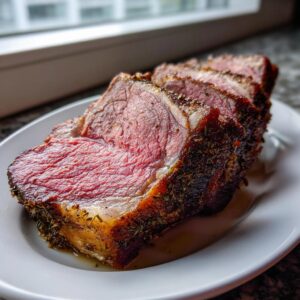
Make a tender, juicy prime rib roast with a flavorful, crisp crust using the reliable reverse sear method. This recipe is perfect for holiday dinners and special occasions.
- Prep Time: 25 min
- Cook Time: 2 hr 30 min
- Total Time: 3 hr 10 min
- Yield: 6-8 servings 1x
- Category: Main Course
- Method: Reverse Sear Oven Roasting
- Cuisine: American
- Diet: Low Calorie
Ingredients
Scale
- 1 (5-7 lb) bone-in prime rib roast (about 2 ribs)
- 3 tablespoons coarse kosher salt
- 2 tablespoons black peppercorns, freshly cracked
- 1 tablespoon dried rosemary
- 1 tablespoon dried thyme
- 1 tablespoon garlic powder
- 1/2 cup unsalted butter, softened
- 4 cloves garlic, minced
- 1/4 cup fresh parsley, chopped
- 2 tablespoons olive oil
- 1 cup beef broth (for resting)
Instructions
- Remove the prime rib from the refrigerator 2 to 3 hours before cooking to allow it to come closer to room temperature. Pat the roast completely dry with paper towels.
- Prepare the herb butter: In a small bowl, combine the softened butter, minced garlic, and chopped parsley. Mix until fully incorporated.
- Prepare the dry rub: In a separate small bowl, mix the kosher salt, cracked black pepper, dried rosemary, dried thyme, and garlic powder.
- Season the roast: Rub the entire surface of the roast evenly with the olive oil. Then, generously apply the dry rub mixture over all sides of the roast.
- Apply the herb butter: Spread the herb butter mixture over the top and sides of the roast.
- Preheat your oven to 250 degrees Fahrenheit. Place the roast, fat-side up, on a wire rack set inside a sturdy roasting pan.
- Slow roast: Cook the prime rib using the reverse sear method. Insert a reliable meat thermometer into the thickest part of the roast, avoiding the bone. Roast until the internal temperature reaches 115 degrees Fahrenheit for medium-rare. This typically takes about 1.5 to 2.5 hours, depending on the size of your roast.
- Rest the roast: Once the target temperature is reached, carefully remove the roast from the oven. Transfer it to a cutting board, tent loosely with foil, and let it rest for 30 minutes. This resting period is crucial for even cooking.
- Sear for the crust: Increase the oven temperature to 450 degrees Fahrenheit. Return the roast to the hot oven (uncovered) and cook for 10 to 15 minutes, or until the exterior develops a deep brown, crisp crust. Monitor closely to prevent burning.
- Final rest and serve: Remove the roast from the oven when the internal temperature reaches 125 degrees Fahrenheit (for medium-rare). Let the roast rest again for 15 minutes before carving. Place the roast on a cutting board, pour the beef broth around the base of the roast (this keeps the drippings moist), and tent loosely with foil again.
- Carve thick slices against the grain and serve immediately with pan drippings or horseradish sauce.
Notes
- For best results and consistent temperature, use a reliable digital meat thermometer.
- If you are planning your holiday menu and need to manage cooking times, consider how a meal planning service might help organize your side dishes.
- To achieve the best crust, ensure the roast is completely dry before applying the rub.
- If you prefer a less intense crust, you can skip the final high-heat sear and simply let the roast rest longer after the slow cook phase.
Nutrition
- Serving Size: 6 oz cooked
- Calories: 450
- Sugar: 0
- Sodium: 650
- Fat: 30
- Saturated Fat: 14
- Unsaturated Fat: 16
- Trans Fat: 0
- Carbohydrates: 0
- Fiber: 0
- Protein: 42
- Cholesterol: 140
Find it online: https://cutcooktaste.com/foolproof-reverse-sear-prime-rib-roast/