Foolproof Standing Rib Roast with Garlic Herb Crust (Juicy Prime Rib)
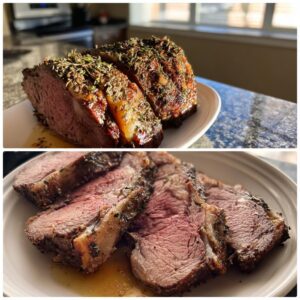
Make a show-stopping, incredibly juicy Standing Rib Roast using a simple garlic herb butter crust and the reverse sear method. This recipe delivers tender meat perfect for your holiday centerpiece.
- Prep Time: 20 min
- Cook Time: 3 hr 30 min
- Total Time: 4 hr 0 min
- Yield: 6-8 servings 1x
- Category: Main Course
- Method: Oven Roasting (Reverse Sear)
- Cuisine: American
- Diet: Low Calorie
Ingredients
Scale
- 1 (4-6 lb) bone-in standing rib roast (Prime Rib)
- 3 tablespoons coarse kosher salt
- 2 tablespoons freshly ground black pepper
- 1 tablespoon dried thyme
- 1 tablespoon dried rosemary
- 6 cloves garlic, minced
- 4 tablespoons unsalted butter, softened
- 1 tablespoon olive oil
- 1 teaspoon Dijon mustard
- 1 cup beef broth (for pan drippings)
Instructions
- Remove the roast from the refrigerator 2 to 3 hours before cooking to allow it to come to room temperature. Pat the entire roast dry with paper towels.
- Prepare the herb butter: In a small bowl, combine the softened butter, minced garlic, thyme, rosemary, Dijon mustard, salt, and pepper. Mix until fully combined.
- Rub the entire surface of the roast evenly with olive oil, then spread the garlic herb butter mixture over the roast.
- Preheat your oven to 250°F (120°C). Place the roast, fat side up, on a rack in a roasting pan. If you have bones, ensure they are positioned under the roast or tied back securely.
- Insert a meat thermometer into the thickest part of the roast, avoiding bone contact.
- Slow roast the rib roast until the internal temperature reaches 115°F (46°C) for medium-rare. This may take 2 to 3 hours, depending on the size.
- Remove the roast from the oven. Increase the oven temperature to 450°F (230°C).
- Place the roast back in the hot oven and sear for 10 to 15 minutes, until the exterior crust is deep brown and crisp.
- Remove the roast from the oven when the internal temperature reaches 125°F (52°C) for medium-rare.
- Transfer the roast to a cutting board, tent loosely with foil, and let it rest for at least 20 minutes before carving. This resting period is crucial for juiciness.
- While resting, pour the beef broth into the roasting pan drippings and scrape up any browned bits to make a simple pan sauce, if desired.
- Slice between the bones and serve immediately.
Notes
- For the best results, use a reliable meat thermometer to monitor the internal temperature during the slow roast phase.
- If you are planning your holiday feast, consider using a meal planning approach to schedule prep time around this long roast.
- This reverse sear method is superior for achieving an even cook from edge to edge.
Nutrition
- Serving Size: 6 oz cooked
- Calories: 450
- Sugar: 0
- Sodium: 350
- Fat: 35
- Saturated Fat: 15
- Unsaturated Fat: 20
- Trans Fat: 1
- Carbohydrates: 1
- Fiber: 0
- Protein: 35
- Cholesterol: 120