
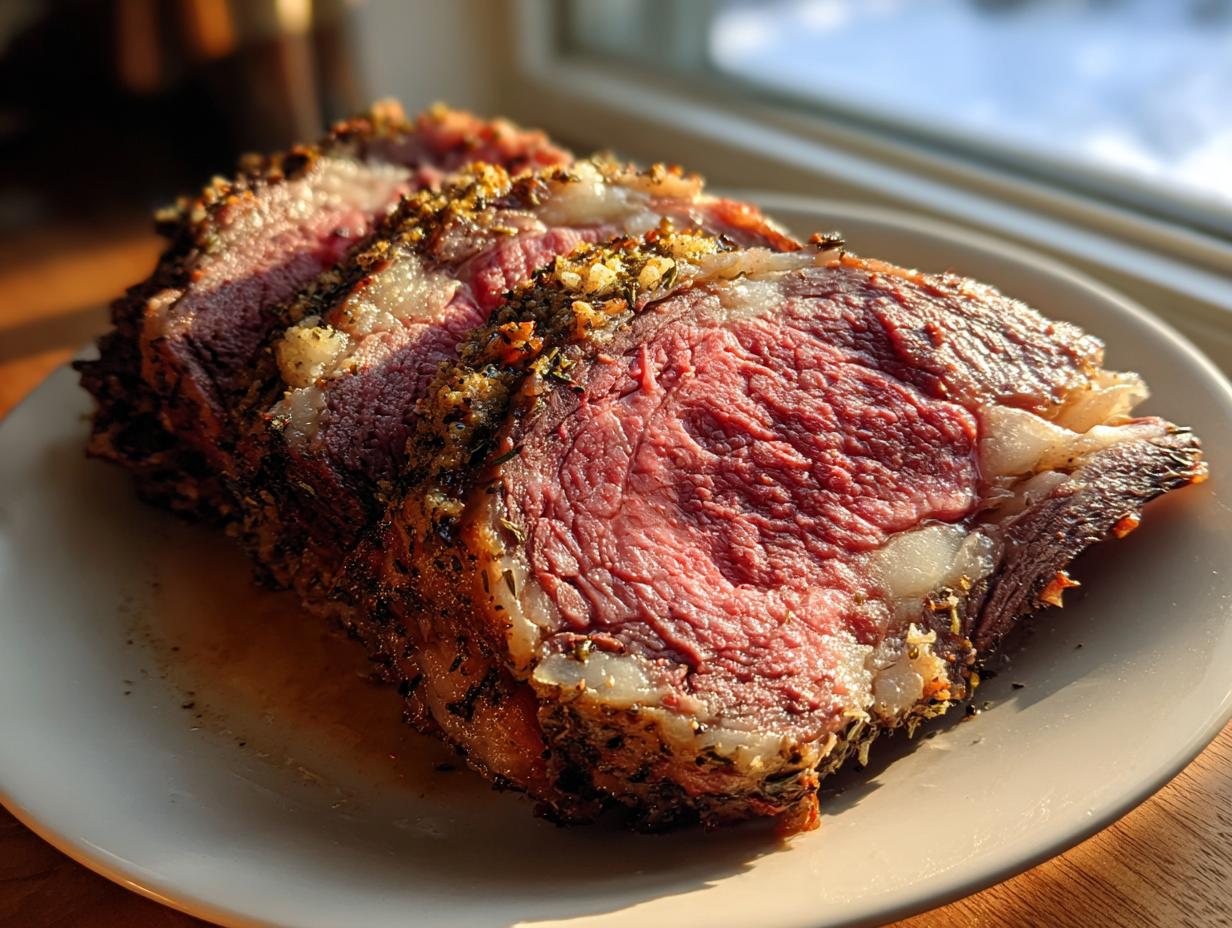

Oh, friends, let’s talk about showing up when it really counts! There is nothing more satisfying than looking across the table on a big holiday—Christmas, New Year’s, whatever your special gathering is—and seeing a gorgeous, perfectly cooked roast as the centerpiece. For me, perfecting the standing rib roast, or Prime Rib as some call it, became my personal mission. I’m Sarah from Cut Cook Taste, and after years of cooking traditional roasts that left me with dry edges and raw middles, I’ve landed on the absolute foolproof way to serve you meat that is incredibly juicy and tender every single time. We’re using a punchy garlic herb crust and leveraging what I think is the single best technique for beef: the reverse sear. If you want to know more about my kitchen journey and why I love perfecting these classic American centerpieces, check out my About Page! Trust me, once you try this method for your next impressive beef roast, you won’t go back!
- Why This Garlic Herb Standing Rib Roast is Your Best Holiday Roast Centerpiece
- Ingredients for a Flavorful Standing Rib Roast
- Essential Equipment for Your Oven Roasted Prime Rib
- Step-by-Step Instructions: How to Cook Standing Rib Roast Perfectly
- Tips for the Best Roast Beef Ever and Troubleshooting
- Serving Suggestions for Your Impressive Beef Roast
- Storing Leftovers of Your Standing Rib Roast
- Frequently Asked Questions about the Prime Rib Roast Recipe
- Share Your Christmas Dinner Main Course Success
Why This Garlic Herb Standing Rib Roast is Your Best Holiday Roast Centerpiece
Okay, I know you see a big, expensive cut of beef like this and you might feel stressed, but this recipe is designed to take all that pressure away! This specific combination of a low oven temperature, a flavorful herb crust, and a fast finish is why I swear by it for every single special occasion.
- It locks in moisture, meaning shockingly tender meat through and through—no more gray bands!
- The garlic and herb butter sinks in, giving you that amazing, rich flavor profile everyone raves about.
- It’s dependable. Seriously, this is a foolproof method for a holiday feast main course. If you loved the consistency of my pot roast recipe, you’ll adore this method for beef. Check out that pot roast if you need something simpler for another night!
Achieving the Perfect Medium-Rare with Reverse Sear
Traditional high-heat roasting blasts the outside of the beef while barely warming the center. The reverse sear flips that script! We gently bring the internal temperature up slowly at a very low heat, which cooks the roast evenly from edge to edge. Then, we hit it with high heat right at the end. That fast blast creates that beautiful, mahogany, flavorful crust without overcooking the tender interior.
Ingredients for a Flavorful Standing Rib Roast
Okay, when you’re making something as magnificent as a standing rib roast, you simply can’t skimp on the quality of the beef. I always tell people to buy the best bone-in Prime Rib they can responsibly swing for, because that fat cap and the bones add so much flavor you won’t regret it! Because the actual herb crust ingredients are so simple, they really need to sing, so use fresh garlic, please!
Here is exactly what you’ll need for this incredible crust and beef preparation. Don’t forget to save this if you’re planning ahead; you can see my other herb crust notes here!
- One (4-6 lb) bone-in standing rib roast—make sure it’s Prime Rib!
- 3 tablespoons coarse kosher salt
- 2 tablespoons freshly ground black pepper
- 1 tablespoon dried thyme
- 1 tablespoon dried rosemary
- 6 cloves garlic, minced (really mince them fine!)
- 4 tablespoons unsalted butter, softened completely
- 1 tablespoon olive oil
- 1 teaspoon Dijon mustard
- 1 cup beef broth (this is for the drippings later, don’t forget it!)
Essential Equipment for Your Oven Roasted Prime Rib
You don’t need a thousand fancy gadgets to nail this impressive beef roast, but there are two pieces of gear that I absolutely refuse to make a standing rib roast without. Getting these right makes the whole low-and-slow process so much less nerve-wracking. Trust me on this one—I learned the hard way!
First up, the MVP: a reliable, instant-read meat thermometer. Because we are relying on exact internal temperatures here for that perfect medium-rare, you must have a good thermometer. If you clip it in wrong, you risk overcooking. I use a digital one that gives me a reading in seconds, which is vital when we pull this roast out for the sear.
Second, you need a sturdy roasting pan with a nice, tight-fitting rack. The rack is important because it lifts the roast up off the bottom of the pan. This allows the hot air to circulate completely around the beef, helping us get that beautiful, even cook we learned about with the reverse sear. Plus, this keeps the bottom from steaming! If you plan on making Yorkshire puddings—and you totally should, they are amazing with this roast—you’ll want to check out my favorite recipe; the drippings gathered in that pan are key!
Finally, don’t forget your roasting pan drippings collector! We are going to use beef broth to deglaze that pan later to make a super simple, flavorful pan sauce. You really don’t want to waste those browned bits stuck on the bottom of the pan.
Step-by-Step Instructions: How to Cook Standing Rib Roast Perfectly
This is where all the magic comes together, and I promise it is easier than you think! Because this is a centerpiece for a big holiday dinner, you need to give yourself breathing room. When I’m organizing my Christmas dinner, I always build out my meal planning schedule a week ahead, so the two to three hours this roast spends slowly cooking doesn’t throw off my gravy timing!
Prepping the Standing Rib Roast and Herb Butter
First things first, you absolutely need patience here before you even turn on the oven! Take that gorgeous standing rib roast out of the fridge about two or three hours before you start cooking. It needs to reach room temperature for the most even cook possible. Then, pat it seriously dry with paper towels—no moisture allowed on the surface!
Now for our flavor bomb! In a bowl, mix that softened, room-temperature butter until it’s smooth. Dump in the minced garlic, herbs, Dijon, salt, and pepper. Smash it all together until it’s one cohesive, gorgeous paste. Once that’s ready, rub the whole roast surface with olive oil, just to help the butter stick, then generously slather that garlic herb butter all over every exposed surface of the beef.
The Low and Slow Roast Phase
Time to preheat the oven to a gentle 250°F (120°C). Place your roast fat-side up on the rack in the roasting pan. Make sure your thermometer probe is nestled into the very thickest part of the meat, avoiding any contact with bone—that’s crucial for getting an accurate reading on your standing rib roast! If you want to master this technique fully, I have a deep dive on slow roasted prime rib techniques!
We’re going slow and steady here. Keep it in the oven until that thermometer hits 115°F (46°C). For most 4-6 pound roasts, this takes around two and a half to three hours. It creeps up slowly, so check it every 30 minutes or so.
The High-Heat Sear and Resting for the Best Rib Roast Recipe
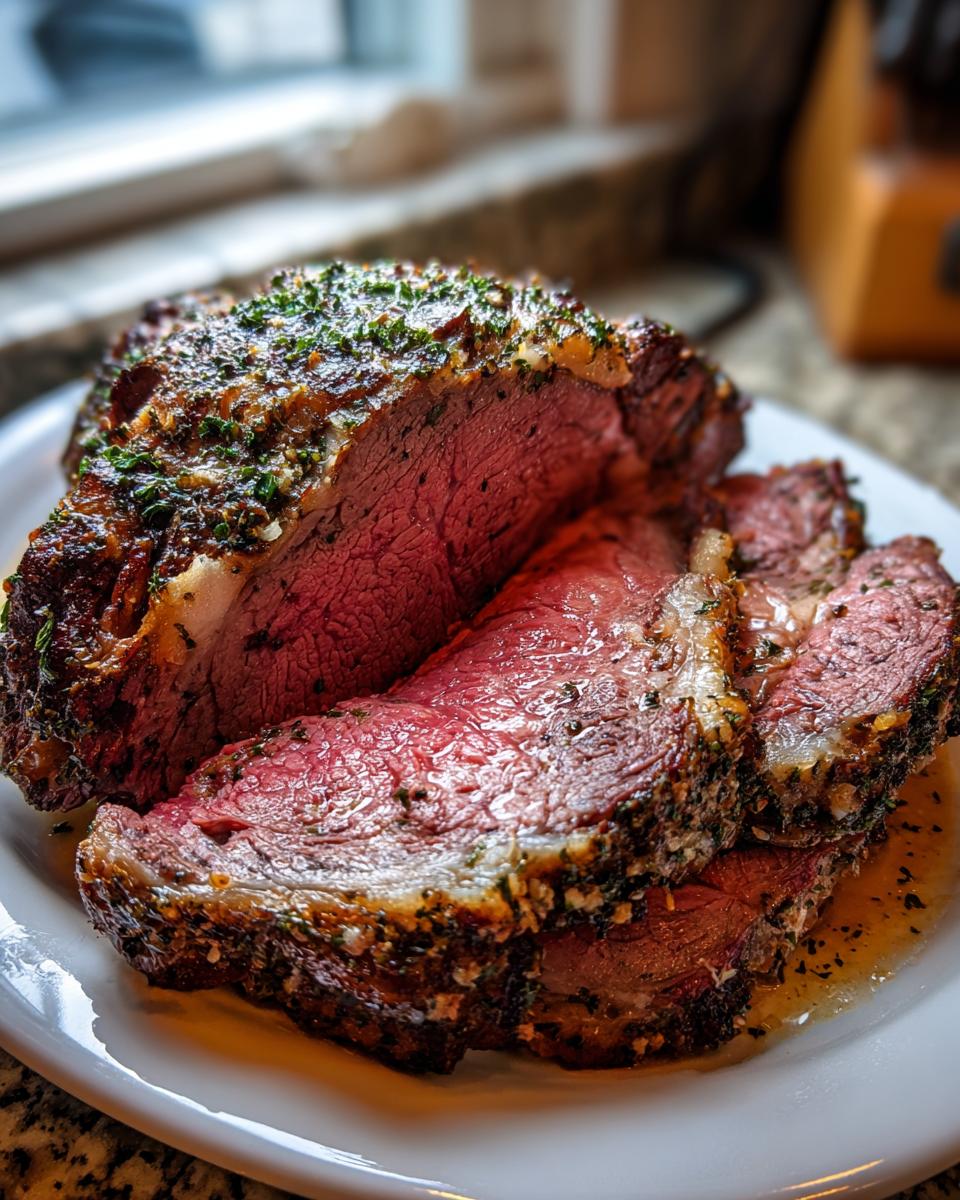
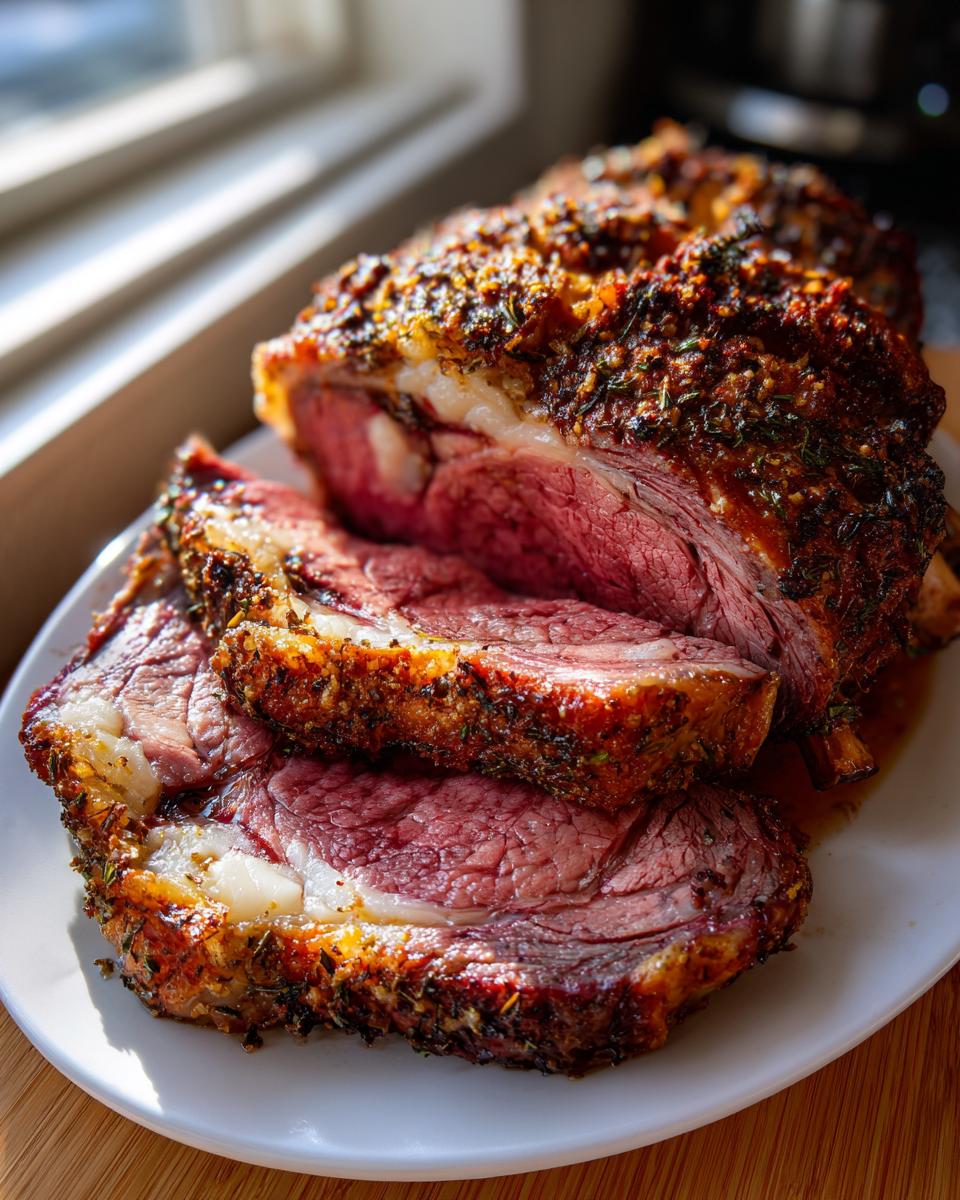
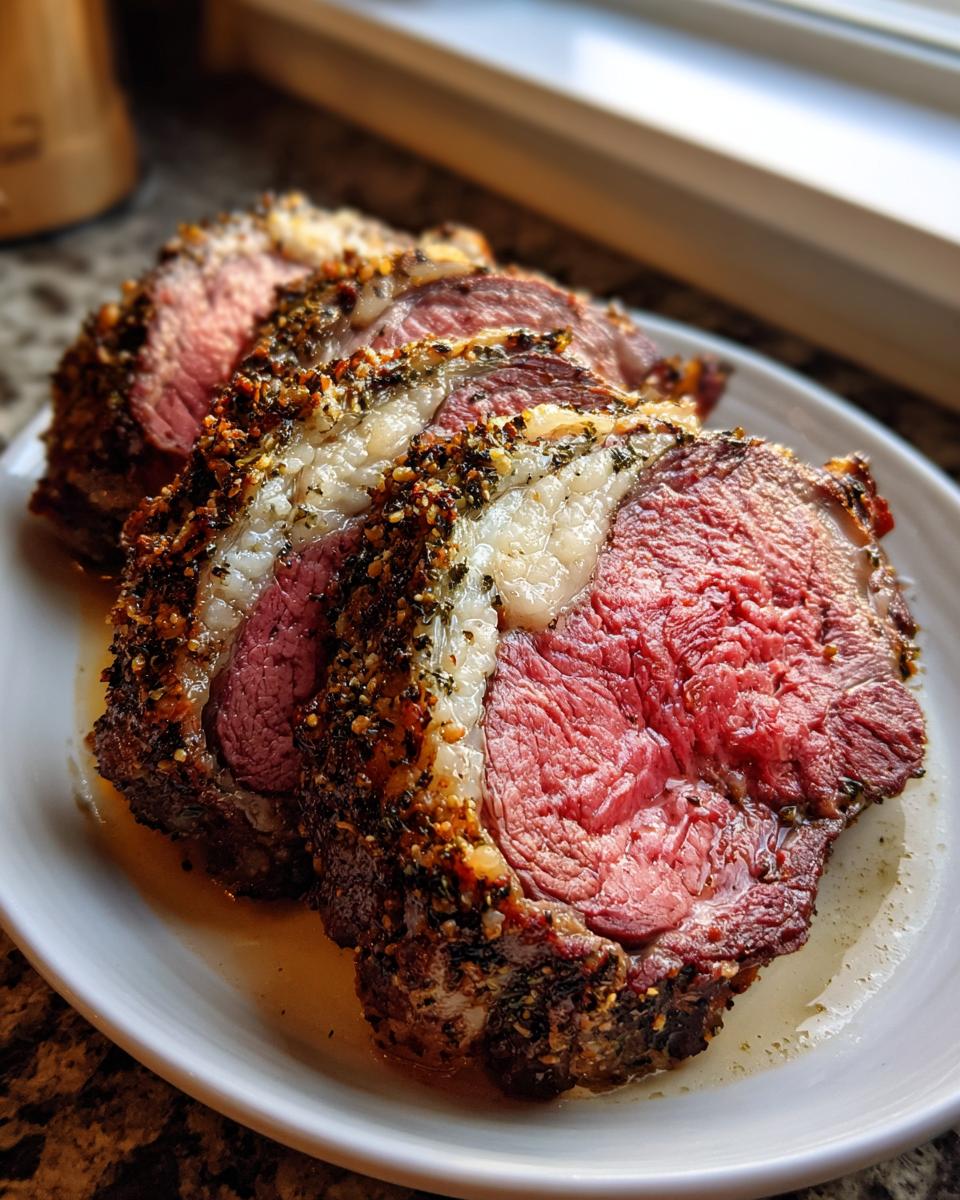
Once we hit 115°F, pull that beauty out! Now, crank your oven way, way up to 450°F (230°C). Place the roast back in the super hot environment and let that crust crisp up for just 10 to 15 minutes. We’re pulling it out permanently when the thermometer reads 125°F (52°C) for that perfect medium-rare finish. Don’t worry about the final carryover cooking; that happens next. You MUST transfer the roast to a cutting board immediately, tent it loosely with foil, and let it rest for a non-negotiable 20 full minutes. That resting period is the secret sauce to a truly juicy roast beef recipe! This is the technique I use for my foolproof reverse sear prime rib, which guarantees unbelievable results!
Tips for the Best Roast Beef Ever and Troubleshooting
Now that you’ve mastered the timing on your standing rib roast, let’s talk about making sure every slice is absolutely perfect. Even the best recipes can run into little hiccups, but knowing these tricks will save you from an overcooked disaster!
The single biggest secret to this amazing juicy roast beef recipe is definitely that meat thermometer. I hear people ask all the time if they can just guess based on time alone, but with a large cut like this prime rib, I beg you not to! Every single oven runs differently, and every roast is a slightly different shape. If you’re aiming for perfection, you need a temperature reading. I know some folks love using a sous-vide precision cooker for steaks, and while that offers amazing texture control, you simply can’t get that gorgeous, deeply crusted exterior on a huge standing rib roast without the high heat finish we used in the sear step.
Here are a few things I’ve learned over the years to handle common issues:
- Bone-In vs. Boneless: If you bought a boneless roast, know that it will cook faster than the bone-in cut we used in the main recipe. Be ready to pull it about 10 to 15 degrees Fahrenheit lower in the slow roast phase, because the bones really do act as insulation!
- The Rest is Real: Seriously, put your knife down for 20 minutes after pulling the roast from the oven. If you carve immediately, all those beautiful juices slosh right onto your cutting board instead of staying put inside the meat fibers. Give it that time to settle, and you get the tender meat you deserve.
- Uneven Crust: If your herb butter didn’t stick perfectly everywhere, don’t panic! Sometimes the fat cap is tough. Just apply any leftover butter mixture directly onto the bare spots during the last 10 minutes of the high-heat sear, or gently baste it a couple of times while it sears for color.
Remember, cooking a big roast is a marathon, not a sprint! If you’re looking for other ways to handle large proteins, I have a fantastic spatchcock chicken recipe that also focuses on even cooking and crispy skin!
Serving Suggestions for Your Impressive Beef Roast
After all that work achieving the perfect medium-rare on your standing rib roast, you need sides that complement it without competing, right? This roast is so rich and savory—especially with that awesome garlic herb crust we made—that I like to pair it with things that offer a little brightness to cut through the fat. It really makes the whole meal sing!
For me, the essential pairing is always excellent potatoes. You need something absorbent for those amazing pan drippings we saved! I love keeping things simple by roasting them alongside some root vegetables. If you want my go-to recipe for potatoes and carrots that get perfectly tender on the inside and slightly crispy on the edges, check out my Roasted Potatoes and Carrots post. They are so easy, you just toss them with oil and herbs and let them roast while the beef rests!
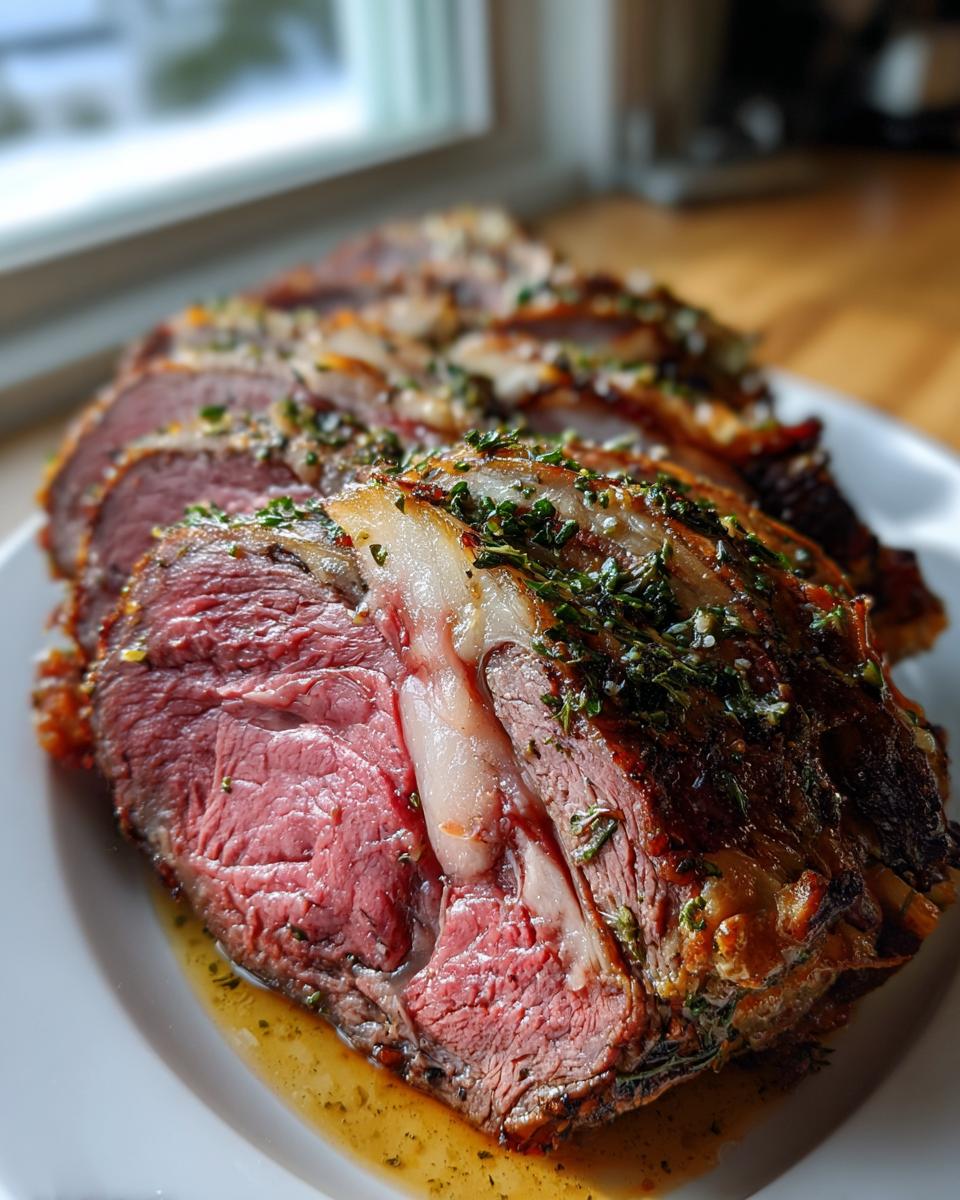
But don’t stop at potatoes! You absolutely need something green and sharp to balance the richness. A simple, lightly dressed arugula salad with a sharp vinaigrette is perfect. Or, if you prefer something cooked, quickly steamed green beans dressed simply with lemon juice and good olive oil work wonders. That hit of acid is just what you need after a few slices of this impressive beef roast. Remember, a great Christmas dinner main course isn’t just about the meat; it’s about what you serve alongside that tender meat!
Storing Leftovers of Your Standing Rib Roast
If, by some miracle, you actually have leftovers of this amazing standing rib roast, you need to treat them carefully so they stay juicy! Don’t just toss them in a container uncovered; they’ll dry out fast. Slice any remaining roast beef thinly, and store it tightly wrapped in the fridge. This keeps it fresh for a few days.
The real secret for reheating slices is using that lovely beef broth we saved from the pan drippings (remember?!) or just some plain beef stock. Never microwave dry meat! Gently reheat the slices in a skillet with just a tablespoon or two of that warm broth until they are heated through. It keeps the meat tender and full of flavor! If you need other ideas for leftovers, I actually have a great French Onion Pot Roast recipe that utilizes leftover cooked beef beautifully!
Frequently Asked Questions about the Prime Rib Roast Recipe
I always get questions about this roast because it’s such an important dish to get right! Don’t worry if you’re feeling a little nervous about timing—I’ve gathered the most common things people ask about making this magnificent **standing rib roast** work perfectly for their holiday feast.
If you want even more general cooking tips, you can always browse my main recipe index!
What is the target internal temperature for a medium-rare standing rib roast?
This is the most important question, hands down! For a perfect medium-rare result with this **standing rib roast**, you need to pull the meat when your thermometer hits between 120°F and 122°F during that final high-heat sear. Why so low? Because that crucial 20-minute resting period allows the carryover cooking to take place! By the time you carve it, the internal temperature will have climbed up to a beautiful, safe, and tender 125°F. Never trust the clock; trust the thermometer!
Can I skip resting the Juicy Roast Beef Recipe?
Oh, please, please don’t skip the rest! I know you’re excited to carve into that showstopper, especially when everyone is hungry, but it is non-negotiable for achieving the juiciest roast beef recipe possible. When the roast comes out of the oven, those muscle fibers are tense, and all the moisture is trapped right in the middle. If you slice it immediately, those juices will spill right out onto your cutting board, leaving you with dryer meat. Resting allows those fibers to relax and redistribute those delicious juices evenly throughout the cut. Give it those 20 minutes!
Is the reverse sear method necessary for this Garlic Herb Prime Rib?
Look, you *could* try to roast this whole **Garlic Herb Prime Rib** at a higher temperature the entire time, but I guarantee you won’t get the same amazing result. I highly recommend the reverse sear method we used above is necessary if you want edge-to-edge medium-rare perfection. If you just blast it with high heat, the outside inch or two will turn dark gray and dry while the center slowly warms up. The slow, low-temperature start ensures every sliver of this prime rib roast is tender and perfectly cooked. It just makes for a much more impressive centerpiece!
Share Your Christmas Dinner Main Course Success
Honestly, seeing your triumphs in the kitchen is the best part of my whole job! I pour my heart into recipes like this Garlic Herb Standing Rib Roast because I want you to feel that pride when family gathers around your table. I know this recipe is excellent, but the real proof comes when you try it yourself for that big holiday feast main course.
So, after you’ve carved that perfectly tender, juicy slice of prime rib, I really, really want to hear about it! Did the reverse sear work like magic for you? Did the garlic herb butter give everyone the flavor they were hoping for? Drop a comment below and let me know how your Christmas Dinner Main Course turned out!
If you run into any snags next time, or if you just want to send me a thank you note (kidding! mostly!), you can always reach out through my Contact Page. Happy cooking, everyone!
PrintFoolproof Standing Rib Roast with Garlic Herb Crust (Juicy Prime Rib)
Make a show-stopping, incredibly juicy Standing Rib Roast using a simple garlic herb butter crust and the reverse sear method. This recipe delivers tender meat perfect for your holiday centerpiece.
- Prep Time: 20 min
- Cook Time: 3 hr 30 min
- Total Time: 4 hr 0 min
- Yield: 6-8 servings 1x
- Category: Main Course
- Method: Oven Roasting (Reverse Sear)
- Cuisine: American
- Diet: Low Calorie
Ingredients
- 1 (4-6 lb) bone-in standing rib roast (Prime Rib)
- 3 tablespoons coarse kosher salt
- 2 tablespoons freshly ground black pepper
- 1 tablespoon dried thyme
- 1 tablespoon dried rosemary
- 6 cloves garlic, minced
- 4 tablespoons unsalted butter, softened
- 1 tablespoon olive oil
- 1 teaspoon Dijon mustard
- 1 cup beef broth (for pan drippings)
Instructions
- Remove the roast from the refrigerator 2 to 3 hours before cooking to allow it to come to room temperature. Pat the entire roast dry with paper towels.
- Prepare the herb butter: In a small bowl, combine the softened butter, minced garlic, thyme, rosemary, Dijon mustard, salt, and pepper. Mix until fully combined.
- Rub the entire surface of the roast evenly with olive oil, then spread the garlic herb butter mixture over the roast.
- Preheat your oven to 250°F (120°C). Place the roast, fat side up, on a rack in a roasting pan. If you have bones, ensure they are positioned under the roast or tied back securely.
- Insert a meat thermometer into the thickest part of the roast, avoiding bone contact.
- Slow roast the rib roast until the internal temperature reaches 115°F (46°C) for medium-rare. This may take 2 to 3 hours, depending on the size.
- Remove the roast from the oven. Increase the oven temperature to 450°F (230°C).
- Place the roast back in the hot oven and sear for 10 to 15 minutes, until the exterior crust is deep brown and crisp.
- Remove the roast from the oven when the internal temperature reaches 125°F (52°C) for medium-rare.
- Transfer the roast to a cutting board, tent loosely with foil, and let it rest for at least 20 minutes before carving. This resting period is crucial for juiciness.
- While resting, pour the beef broth into the roasting pan drippings and scrape up any browned bits to make a simple pan sauce, if desired.
- Slice between the bones and serve immediately.
Notes
- For the best results, use a reliable meat thermometer to monitor the internal temperature during the slow roast phase.
- If you are planning your holiday feast, consider using a meal planning approach to schedule prep time around this long roast.
- This reverse sear method is superior for achieving an even cook from edge to edge.
Nutrition
- Serving Size: 6 oz cooked
- Calories: 450
- Sugar: 0
- Sodium: 350
- Fat: 35
- Saturated Fat: 15
- Unsaturated Fat: 20
- Trans Fat: 1
- Carbohydrates: 1
- Fiber: 0
- Protein: 35
- Cholesterol: 120