
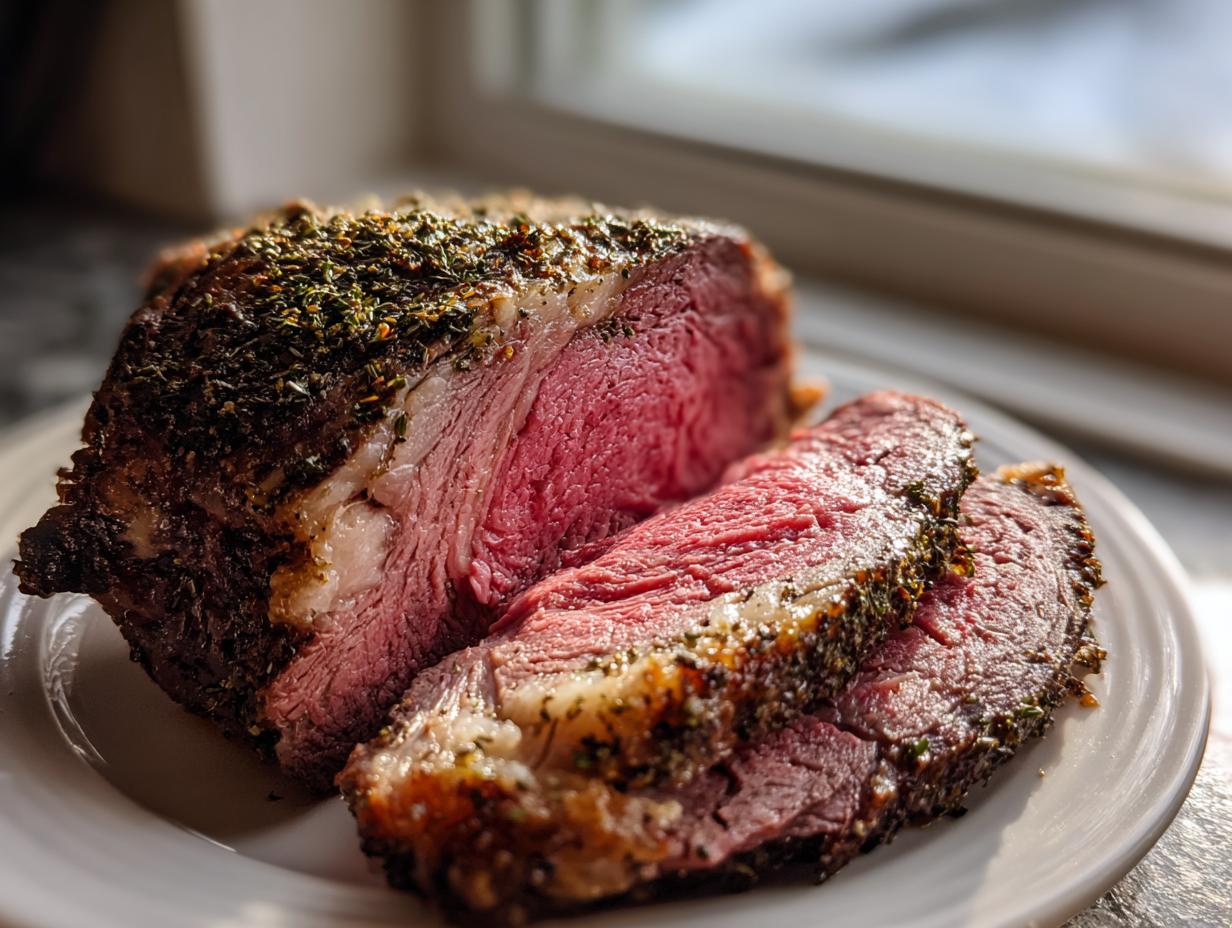

If you’re staring down a beautiful, massive cut of meat destined for your holiday table and feeling that little knot of panic, I get it! Cooking a showstopper like prime rib can feel intimidating. But take a deep breath—that feeling stops right here. My goal, like everything I share on Cut Cook Taste, is to take those classic American dishes we all love and make them absolutely foolproof. I’ve tested countless ways to roast beef over the years, drawing on my family’s history of cooking big dinners. Trust me when I say this ultimate reverse sear prime rib recipe is the one. You get unbelievable tenderness inside, a guaranteed perfect medium-rare, and that crisp, flavorful crust every single time. Say goodbye to gray edges and hello to your new favorite centerpiece!
- Why This Reverse Sear Prime Rib Recipe Guarantees Success
- Ingredients for Your Herb Crusted Prime Rib
- Essential Equipment for the Best Prime Rib Recipe
- Foolproof Prime Rib Instructions: Step-by-Step Guide
- Tips for Success When Making Prime Rib
- Serving Suggestions for Your Holiday Roast Beef Dinner
- Storage and Reheating Instructions for Leftover Prime Rib
- Frequently Asked Questions About Cooking Prime Rib
- Estimating the Nutritional Value of This Prime Rib
- Share Your Impressive Dinner Party Roast Experience
Why This Reverse Sear Prime Rib Recipe Guarantees Success
I know the thought of that big roast sitting in the oven for hours worries you. Most folks are terrified of an uneven roast—overdone edges and sadly rare centers. That’s why we use the reverse sear method! It flips the traditional script, which is exactly what gives you the confidence you need for your holiday table.
- This method builds an incredible Tender Juicy Prime Rib Roast that melts in your mouth.
- You get that sought-after Juicy Prime Rib with Crispy Crust because you cook low, then sear high!
The Magic of the Reverse Sear Prime Rib Guide
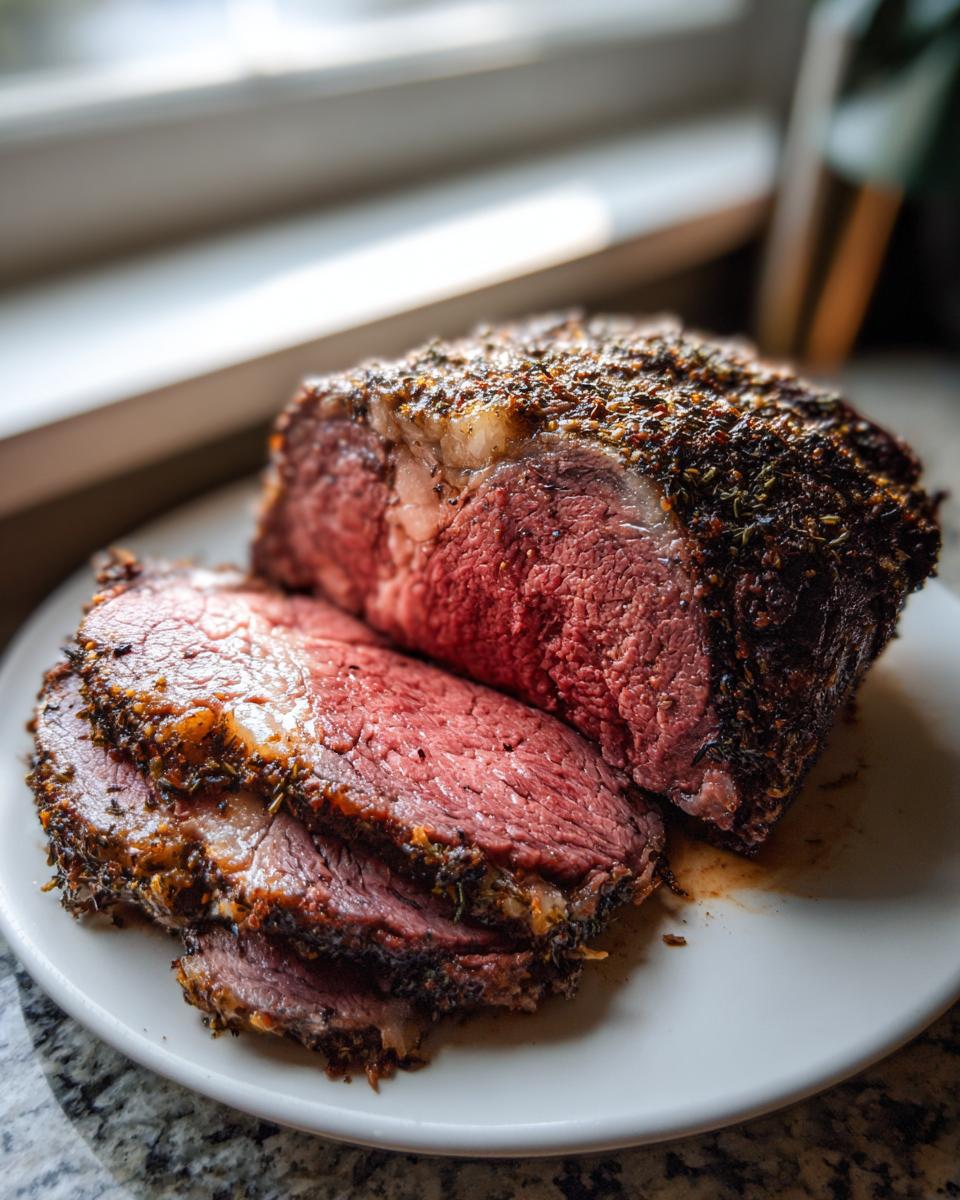
So, with the reverse sear, we let the roast hang out at a super low temperature, like 250°F, until it’s *almost* done. Because the heat is gentle, the heat permeates evenly from edge to edge. This eliminates that dreaded thick gray band of overcooked meat you get from high-heat roasting.
Perfect Medium Rare Roast Beef Every Time
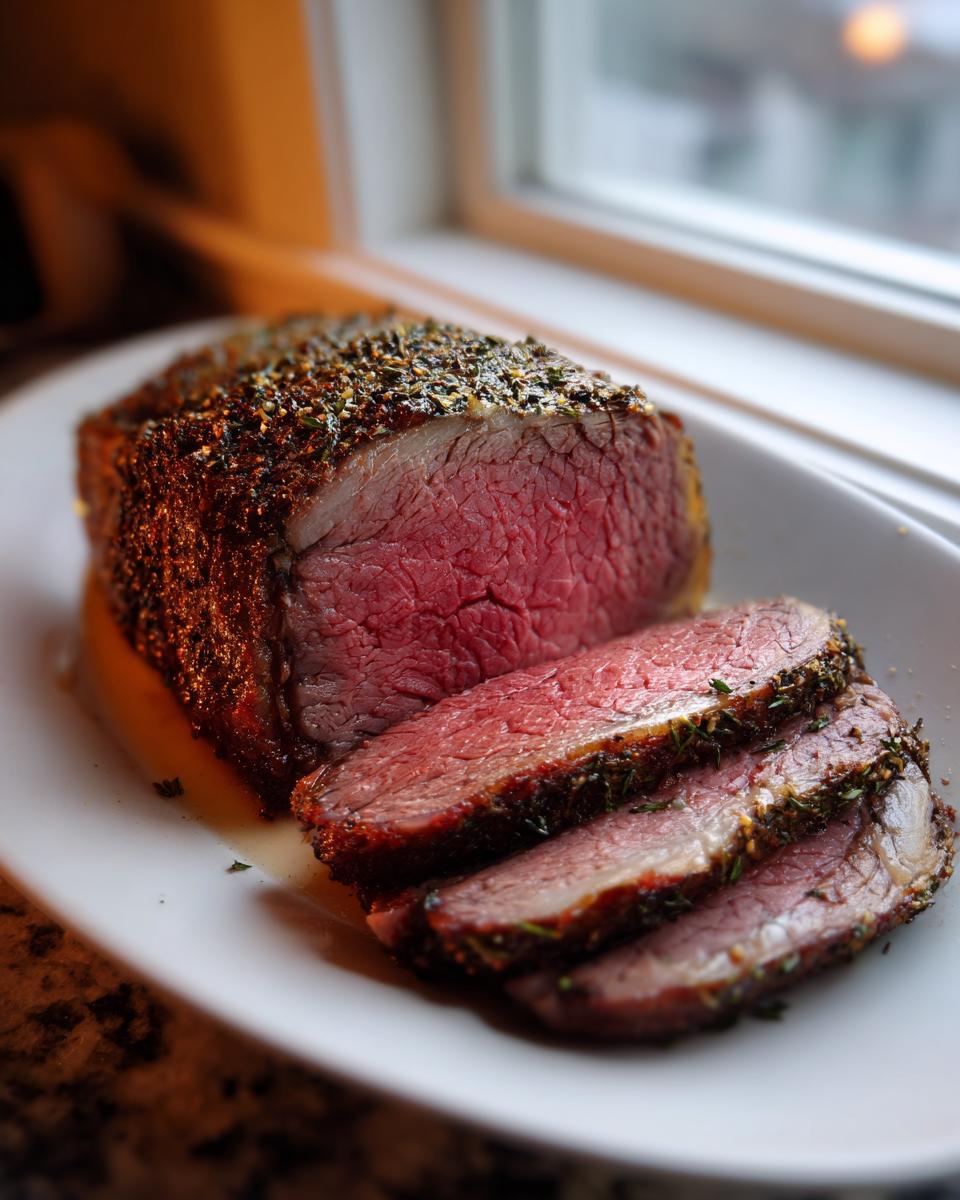
Once the internal temperature is just shy of what we need, we pull it out, let it rest, and then give it a blast of 450°F heat. This high heat doesn’t have time to creep into the center, but it quickly crisps up that exterior layer of rub and herbs. It’s the secret to those Foolproof Prime Rib Instructions—accuracy through temperature control!
Ingredients for Your Herb Crusted Prime Rib
Okay, let’s talk about what you need for this incredible Herb Crusted Prime Rib. You’ll need a 5 to 7-pound bone-in roast—that bone is your friend for flavor, seriously! Make sure the butter is softened and you’re using coarse kosher salt, not the fine stuff. We’re layering up the flavor with rosemary, thyme, garlic powder, fresh parsley, and plenty of fresh cracked pepper. Don’t forget the olive oil to help everything stick!
Ingredient Notes and Substitutions for Prime Rib
Listen, this is where many people slip up when making a big purchase like this. You absolutely must use a bone-in cut if you can find one; the bones insulate the meat wonderfully and really add to that Melt in Your Mouth Roast texture. Also, getting a reliable digital meat thermometer isn’t optional here—it’s the key to foolproof results. Since the quality of the beef really dictates the final flavor of your prime rib, source the best cut you can afford. It’s worth every penny for a holiday masterpiece.
Essential Equipment for the Best Prime Rib Recipe
You can’t wing a big roast like this; it needs the right tools! Having everything set up beforehand makes the whole process so much smoother. I always make sure I have a sturdy roasting pan ready to go. That pan needs a good wire rack, too—we need air circulating around that roast while it cooks low and slow. Most importantly, grab your absolute best reliable digital meat thermometer. This isn’t the time for guessing games; you need perfect accuracy for that medium-rare center!
Foolproof Prime Rib Instructions: Step-by-Step Guide
This is where the magic happens, and honestly, this is the easiest roast you will ever cook because the oven does all the hard work. The key is patience in the beginning. Don’t rush the prep, and definitely don’t skip the resting!
Preparing Your Prime Rib Roast for Seasoning
First things first: take that beautiful cut of meat out of the fridge about three hours before you plan to cook it. We need the center of that prime rib to warm up a bit for even cooking later. When you’re ready, grab paper towels and pat that entire roast until it is bone dry. I mean totally dry! Moisture is the enemy of crust, so be aggressive here. While it’s warming, mix up your herb butter—just soften that butter, mix in the fresh parsley and garlic, and set it aside. Separately, mix all your dried spices for the rub. Once both are ready, rub the whole roast with olive oil, then aggressively coat it with the salt/spice rub. Finally, take that green herb butter and spread it all over the top and sides. It smells amazing already!
The Slow Roast Phase: How to Cook Prime Rib in Oven
Preheat your oven down low, to a cozy 250 degrees Fahrenheit. Place the roast fat-side up on that wire rack in your pan. This is where your thermometer comes in! Stick it deep into the thickest part, being sure not to touch the bone. We are going to slow roast this until the thermometer reads 115 degrees Fahrenheit. This is usually around two to two-and-a-half hours, but trust the thermometer, not the clock! Once it hits 115°F, carefully pull the prime rib out, tent it loosely with foil on your cutting board, and let it chill out for a good 30 minutes while the oven gets hot.
Achieving the Juicy Prime Rib with Crispy Crust (The Sear)
Now we change the game! Crank your oven up screaming hot to 450 degrees Fahrenheit. Take that foil off the roast—we want direct, high heat. Pop it back in uncovered and roast it for just 10 to 15 minutes. Watch it closely here, because we are developing that gorgeous, crunchy, golden-brown crust. The internal temp should climb to about 125°F for that perfect medium-rare. When it hits that temp, pull it out immediately! Pour about a cup of beef broth into the bottom of the pan (this keeps the drippings from burning while you rest) and tent it again. Give it one final 15-minute rest so those juices settle. Then slice and serve! If you want to make some killer gravy or au jus for your other sides, check out how I manage my Yorkshire pudding drippings!
Tips for Success When Making Prime Rib
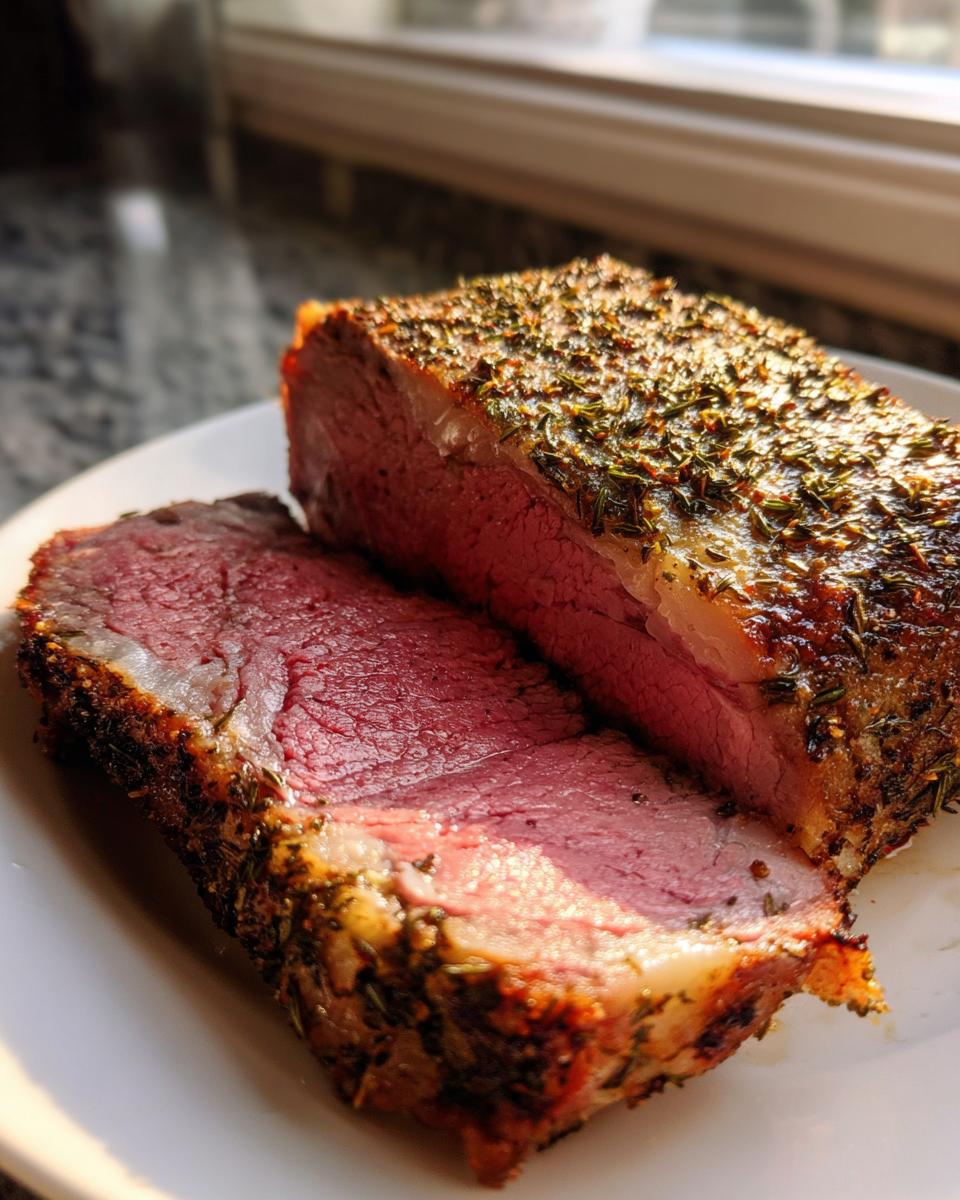
Even with this straightforward reverse sear method, a couple of small things can make your prime rib truly flawless. If you were nervous about this recipe, I promise this is where things become totally manageable for Easy Prime Rib for Beginners!) First and foremost: use that digital thermometer! I say this all the time, but guessing the temperature on a big roast like this is a recipe for disaster. You need to know exactly what the internal temp is doing at all times.
Also, I know it seems counterintuitive, but make sure you pat that roast completely dry after you take it out of the fridge. Seriously, dry as a bone! That moisture will steam the meat instead of letting that beautiful spice rub crisp up during the final sear temperature boost. For more awesome cooking ideas and tips, browse my full kitchen adventures!
Serving Suggestions for Your Holiday Roast Beef Dinner
That giant, gorgeous roast is the star, but every star needs a great supporting cast! Since this beef is so rich and savory, we want sides that cut through that richness a little bit. Think creamy mashed potatoes—you know, the kind that melt in your mouth—and maybe some sharp, roasted green veggies like Brussels sprouts or asparagus. The whole meal just feels complete and impressive, perfect for that big Christmas Prime Rib Centerpiece presentation.
Prime Rib with Horseradish Cream Sauce
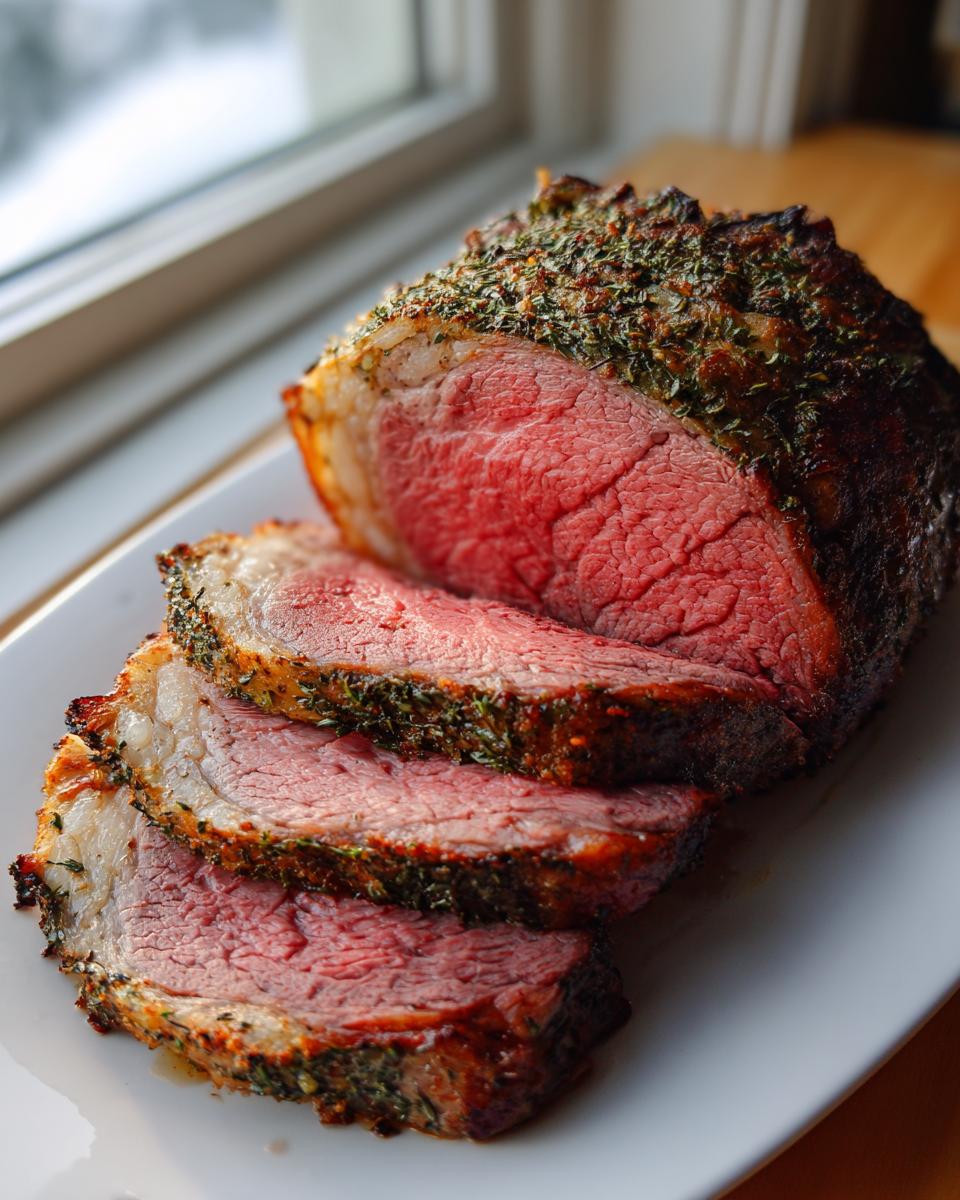
If you only put one sauce on the table, make it horseradish cream! The cool, sharp bite of the prepared horseradish mixed with some sour cream or crème fraîche is the perfect counterpart to that fatty, flavorful roasted beef. It wakes up every bite. I have a fantastic, easy creamy sauce recipe that works perfectly here, which you can check out for a little extra wow factor instead of plain horseradish, though that works great too! See how to make my peppercorn sauce recipe if you want a richer alternative!
Storage and Reheating Instructions for Leftover Prime Rib
Don’t you just love having amazing leftovers? Leftover prime rib is even better the next day! For storage, here’s my trick: slice whatever you think you might eat soon, and store those thin slices in an airtight container. Keep them in the fridge for up to four days. If you are lucky enough to have a huge roast left, wrap the main hunk tightly in plastic wrap and then foil before refrigerating.
Reheating is tricky because we don’t want to dry out that beautiful meat, right? For one or two slices, I put them in a small oven-safe dish, add just a splash—maybe a tablespoon—of beef broth or water, cover it tightly with foil, and warm it gently in a low oven, maybe 300°F, until just heated through. Seriously, don’t overheat it!
Frequently Asked Questions About Cooking Prime Rib
It’s totally normal to have a few lingering questions when you’re committing to making a huge, beautiful roast like this for the first time! I’ve compiled the questions I get asked the most about achieving that perfect result. Don’t hesitate to try this out for your next Christmas Prime Rib Centerpiece; I promise, you can handle it!
What is the difference between the slow-roasted prime rib method and standard roasting?
Oh, this is a fantastic question that gets right to the heart of why we use the reverse sear! The standard roasting method blasts the meat with high heat right away. This cooks the outside way faster than the inside, leading to that undesirable thick gray band where the meat is overdone. The Slow Roasted Prime Rib Method, or low-and-slow approach, gently brings the entire roast up to near-final temperature before we even think about searing. It’s all about precise, even temperature control from the start.
Can I use a boneless prime rib recipe instead?
You certainly can use a boneless roast, and sometimes those are easier to handle! The main thing you have to remember when swapping to a Boneless Prime Rib Recipe is that the cooking time will shorten up a bit because there’s no bone insulating the meat. Since the bone helps insulate, a boneless roast will generally cook faster overall in the slow-roasting phase. Keep your thermometer handy and pull it about 5 to 10 degrees Fahrenheit earlier than you would for a bone-in cut!
How do I ensure my prime rib has a crispy crust without overcooking the center?
This is the whole point of the reverse sear, isn’t it? You absolutely must allow that initial rest period after the low-temperature cook. When that roast comes out at 115°F, pulling it off the heat allows the carry-over cooking to slow down while the exterior slightly cools. Then, when you crank the oven up to 450°F for that final blast, you are only searing for maybe 10 or 15 minutes. That short, intense heat perfectly crisps the herbs and fat cap without giving the center time to cook past that gorgeous medium-rare, just like you read about in this Reverse Sear Prime Rib Guide!
Estimating the Nutritional Value of This Prime Rib
Now, I know we’re focusing on flavor and making an impressive centerpiece, but for those of you who like to keep track, here are the estimated numbers for this roast. Keep in mind that since we used a large cut of bone-in beef, these numbers are based on serving 6 to 8 people, and they really depend heavily on the fat marbling in your specific cut!
These figures are just estimates based on the recipe yield and our ingredient choices, so adjust if you trim more fat or use a different cut. For a 6 oz serving, you’re looking at about 450 calories, 42 grams of protein, and just 30 grams of fat. And guess what? Zero carbs or sugar!
Share Your Impressive Dinner Party Roast Experience
Seriously, after all that work—the rubbing, the low roasting, the screaming-hot sear—you deserve applause! I truly think this is the Best Prime Rib Recipe out there for taking the stress out of a big holiday meal. When you pull that perfectly rosy roast out, I want you to feel like the culinary champion you are!
Once you carve it up, please, please snap a picture! I absolutely love seeing your successes in my kitchen and on your tables. Tag me on social media so I can ooh and aah over your Impressive Dinner Party Roast. Did you manage that perfect medium-rare edge-to-edge? Did your family gasp when they saw it?
And if this recipe saved your Christmas dinner or made a Sunday feel extra special, please head back here and leave a quick star rating and review. Those reviews really do help other home cooks conquer their roast fears! If you need a fun, easy appetizer to serve while that final sear is finishing up, you have to try my Easy Cranberry Brie Bites recipe. They are always the first thing gone!
PrintFoolproof Reverse Sear Prime Rib Roast with Herb Crust
Make a tender, juicy prime rib roast with a flavorful, crisp crust using the reliable reverse sear method. This recipe is perfect for holiday dinners and special occasions.
- Prep Time: 25 min
- Cook Time: 2 hr 30 min
- Total Time: 3 hr 10 min
- Yield: 6-8 servings 1x
- Category: Main Course
- Method: Reverse Sear Oven Roasting
- Cuisine: American
- Diet: Low Calorie
Ingredients
- 1 (5-7 lb) bone-in prime rib roast (about 2 ribs)
- 3 tablespoons coarse kosher salt
- 2 tablespoons black peppercorns, freshly cracked
- 1 tablespoon dried rosemary
- 1 tablespoon dried thyme
- 1 tablespoon garlic powder
- 1/2 cup unsalted butter, softened
- 4 cloves garlic, minced
- 1/4 cup fresh parsley, chopped
- 2 tablespoons olive oil
- 1 cup beef broth (for resting)
Instructions
- Remove the prime rib from the refrigerator 2 to 3 hours before cooking to allow it to come closer to room temperature. Pat the roast completely dry with paper towels.
- Prepare the herb butter: In a small bowl, combine the softened butter, minced garlic, and chopped parsley. Mix until fully incorporated.
- Prepare the dry rub: In a separate small bowl, mix the kosher salt, cracked black pepper, dried rosemary, dried thyme, and garlic powder.
- Season the roast: Rub the entire surface of the roast evenly with the olive oil. Then, generously apply the dry rub mixture over all sides of the roast.
- Apply the herb butter: Spread the herb butter mixture over the top and sides of the roast.
- Preheat your oven to 250 degrees Fahrenheit. Place the roast, fat-side up, on a wire rack set inside a sturdy roasting pan.
- Slow roast: Cook the prime rib using the reverse sear method. Insert a reliable meat thermometer into the thickest part of the roast, avoiding the bone. Roast until the internal temperature reaches 115 degrees Fahrenheit for medium-rare. This typically takes about 1.5 to 2.5 hours, depending on the size of your roast.
- Rest the roast: Once the target temperature is reached, carefully remove the roast from the oven. Transfer it to a cutting board, tent loosely with foil, and let it rest for 30 minutes. This resting period is crucial for even cooking.
- Sear for the crust: Increase the oven temperature to 450 degrees Fahrenheit. Return the roast to the hot oven (uncovered) and cook for 10 to 15 minutes, or until the exterior develops a deep brown, crisp crust. Monitor closely to prevent burning.
- Final rest and serve: Remove the roast from the oven when the internal temperature reaches 125 degrees Fahrenheit (for medium-rare). Let the roast rest again for 15 minutes before carving. Place the roast on a cutting board, pour the beef broth around the base of the roast (this keeps the drippings moist), and tent loosely with foil again.
- Carve thick slices against the grain and serve immediately with pan drippings or horseradish sauce.
Notes
- For best results and consistent temperature, use a reliable digital meat thermometer.
- If you are planning your holiday menu and need to manage cooking times, consider how a meal planning service might help organize your side dishes.
- To achieve the best crust, ensure the roast is completely dry before applying the rub.
- If you prefer a less intense crust, you can skip the final high-heat sear and simply let the roast rest longer after the slow cook phase.
Nutrition
- Serving Size: 6 oz cooked
- Calories: 450
- Sugar: 0
- Sodium: 650
- Fat: 30
- Saturated Fat: 14
- Unsaturated Fat: 16
- Trans Fat: 0
- Carbohydrates: 0
- Fiber: 0
- Protein: 42
- Cholesterol: 140